How a Car Accident Impacts Your Vision
After a car accident, it is natural to focus on neck pain, headaches, or other obvious injuries. Changes in vision may be less noticeable at first, especially when the eyes look normal. Yet a collision can involve a sudden jolt to the head, neck, or body, and concussion symptoms may appear immediately or develop hours or days later. Blurred vision, dizziness, balance problems, and sensitivity to light are among the symptoms recognized after concussion.
Our Markham eye care team at Warden Optometry and Neuro Vision discusses further below.
Why Can Vision Change After a Collision?
Clear, comfortable vision depends on more than eyesight. The eyes must focus accurately, move smoothly, point at the same place, and work with the brain's balance and visual-processing systems.
After a concussion or other collision-related injury, one or more of these functions may become less efficient. That can make everyday activities such as reading, using a computer, walking through a busy store, or driving feel unusually demanding. Research involving people with concussion has identified problems with focusing, eye teaming, and eye movements, although symptoms and recovery differ from person to person.
Vision Symptoms to Watch For
Symptoms may be constant, or they may become more noticeable with fatigue, screen use, movement, or visually busy surroundings. Watch for:
- Blurred or fluctuating vision at near or far
- Double vision or words that appear to move
- Headaches or pressure around the eyes
- Eye strain, aching, or rapid visual fatigue
- Difficulty changing focus between the road, dashboard, phone, and printed page
- Losing your place, skipping lines, or needing to reread
- Light sensitivity or discomfort under fluorescent lighting
- Dizziness, nausea, motion sensitivity, or poor balance
- Reduced depth perception or uncertainty on stairs and curbs
- Difficulty concentrating while reading or using a screen
A standard distance eye chart does not assess every visual skill needed for daily activities. Someone may be able to read small letters clearly while still having difficulty sustaining focus, coordinating the eyes, tracking words, or processing movement comfortably.
When Should You Seek Urgent Care?
Some symptoms following a collision require immediate medical attention. Call 911 or go to the nearest emergency department for new double vision, one pupil becoming larger than the other, a severe or worsening headache, repeated vomiting, a seizure, weakness or numbness, increasing confusion, loss of consciousness, or difficulty staying awake.
Sudden vision loss, a new shower of floaters, flashes of light, or a curtain or shadow across your vision also requires urgent assessment. These symptoms can be associated with a retinal tear or another eye emergency.
What Can a Vision Assessment Examine?
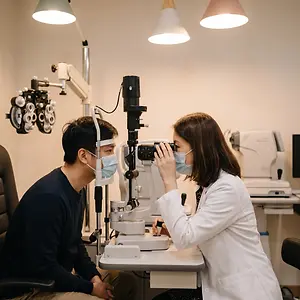
Once urgent injuries have been addressed, an eye and neuro-visual assessment may help clarify what is contributing to continuing visual symptoms. Depending on your concerns, testing may examine eye health, prescription needs, focusing ability, eye alignment and teaming, tracking, depth perception, visual fields, and how vision interacts with balance and movement.
The purpose of an assessment is to identify clinical findings and discuss appropriate next steps. Recommendations depend on the examination and may include updated lenses, practical changes to visual tasks, monitoring, referral to another healthcare provider, or an individualized rehabilitation plan when clinically appropriate. No single approach is right for every person.
Supporting Your Eyes During Recovery: Book an Appointment Today
Follow the advice of the healthcare professional managing your injury. Keep notes about when symptoms occur and which activities make them worse. Use prescribed glasses, take sensible breaks from visually demanding activities, adjust screen brightness, and avoid driving whenever your vision is blurred, doubled, or otherwise unsafe. Do not push through symptoms that are rapidly worsening.
Warden Optometry and Neuro Vision in Markham provides eye care and neuro-optometric assessments for people experiencing visual concerns after an injury. If you are concerned about symptoms following a car accident, request a consultation with us today!