Feeling Dizzy, Light-Sensitive, or Off-Balance?
If busy stores make you dizzy, bright light causes discomfort, or movement leaves you feeling unsteady, it can be difficult to explain what is happening.
You may see clearly on a standard vision test and still struggle with migraines, motion sensitivity, balance problems, or visually complex environments.
At Warden Optometry and Neuro Vision, we assess how your eyes and brain work together during movement, focusing, and spatial awareness. These neuro-visual functions can affect how comfortably you manage motion, light, and everyday visual demands.
This page focuses on migraine-related symptoms and dizziness or balance concerns without a clear injury trigger. If your symptoms began after a concussion, whiplash, brain injury, stroke, long COVID, or another neurological injury or condition, our Neuro-Optometric Rehab page is the more appropriate place to start.
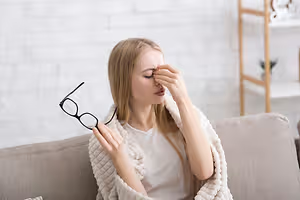
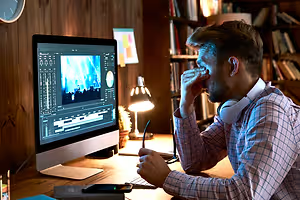
Neuro-Visual Symptoms and Triggers
Your visual system does more than help you see clearly. It also helps your brain process movement, distance, and where you are in space.
When visual information becomes harder to process or coordinate, certain environments or activities may feel overwhelming or disorienting.
You may notice more difficulty with:
- Extended screen time
- Bright lighting or glare
- Fast movement or scrolling
- Crowded or visually busy spaces
- Driving in heavy traffic Fatigue or long days
Busy stores, crowds, traffic, and screens can place greater demands on visual processing, especially when there is a lot of movement or information to take in at once.
Vestibular Dysfunction and Vision
Your vestibular system helps with balance and your sense of movement. Your visual system works alongside it to help you stay oriented as you move.
Vestibular dysfunction refers to problems affecting the balance system. Because visual and vestibular information work together, dizziness, motion sensitivity, or balance concerns may sometimes involve both systems.
A neuro-optometric assessment focuses on the visual side of this relationship. It does not replace medical or vestibular evaluation.
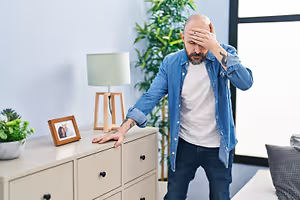

Signs of Neuro-Visual Problems
Symptoms may include:
- Dizziness or lightheadedness, especially with movement
- Light sensitivity in bright or changing environments
- Migraine symptoms associated with visual stress
- Feeling off-balance or unsteady
- Difficulty in busy stores, crowds, or traffic
- Motion sensitivity
- Trouble focusing in visually complex environments
- Blurred or unstable vision
These symptoms can have many causes. A neuro-visual assessment can help determine whether visual function may be contributing.
Binocular Vision Dysfunction (BVD)
Binocular vision dysfunction (BVD) occurs when the two eyes do not coordinate as efficiently as expected.
When eye teaming requires extra effort, some people may experience headaches, eyestrain, difficulty concentrating, visual discomfort, or dizziness.
BVD is only one possible contributor to these symptoms. We need to examine it to determine whether it is present.

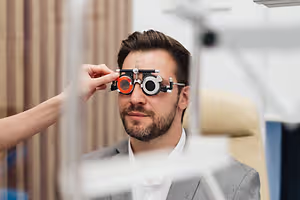
Our Approach to Migraines, Dizziness and Balance
Migraines, dizziness, light sensitivity, and balance problems can overlap, but they do not always have the same cause.
At Warden Optometry and Neuro Vision, we look at when your symptoms occur, what makes them worse, and whether specific aspects of visual function may be contributing.
A neuro-optometric evaluation may assess:
- Eye coordination and alignment
- Eye tracking
- Focusing
- Responses to visual motion
- Visual processing in busy environments
- Spatial awareness
If testing identifies a functional vision problem, your optometrist can explain the findings and discuss appropriate next steps.
When Vision Therapy May Be Recommended
Vision therapy is a structured program that works on specific visual skills and eye-brain coordination.
If an examination identifies problems with tracking, focusing, eye teaming, or related visual functions, we may consider vision therapy as part of your care.
Recommendations depend on your examination findings, not the presence of migraine or dizziness alone.
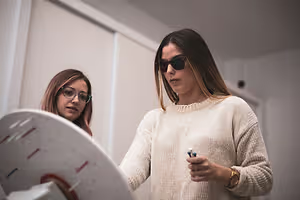

Dizziness or Light Sensitivity After an Injury Is Different
If your dizziness, headaches, light sensitivity, or motion sensitivity began after an injury or neurological event, our Neuro-Optometric Rehab page addresses that different pattern of care.
That pathway focuses specifically on post-injury and neurological changes in visual function.
Migraines, Dizziness & Balance FAQ
Yes. Vision plays an important role in balance, movement, and spatial awareness. Problems with eye coordination or visual processing may contribute to dizziness or disorientation in some people.
Because dizziness has many possible causes, eye doctors should treat visual assessment as one part of appropriate care.
Not necessarily. The inner ear and vestibular system play an important role in balance, while vision helps you understand movement and your position in space.
Some people may have both visual and vestibular factors contributing to their symptoms.
Busy environments contain a lot of movement, patterns, lighting, and visual information.
If you are sensitive to visual motion or have difficulty processing complex scenes, grocery stores, shopping centres, traffic, or crowds may feel uncomfortable or disorienting.
Yes. Light sensitivity can occur with migraine.
If light sensitivity also occurs with dizziness, motion sensitivity, or difficulty in busy environments, a neuro-visual assessment can check whether functional vision problems may also be present.
If your symptoms began after a concussion or another injury or neurological event, the Neuro-Optometric Rehab page is the more appropriate starting point.
Find Out Whether Vision May Be Contributing
If migraines, dizziness, light sensitivity, or feeling off-balance are making everyday activities more difficult, a neuro-visual assessment can help determine whether functional vision may be contributing to your symptoms.
Warden Optometry and Neuro Vision can assess how your eyes work together and respond to movement and complex visual environments. Your optometrist will explain the findings and discuss appropriate next steps based on your results.