Do Your Eyes Struggle to Work Together?
If reading leaves you with headaches, dizziness, eye strain, or double vision, the problem may involve how your eyes work together. Binocular vision dysfunction (BVD) describes difficulty coordinating both eyes as a team, even when each eye may see clearly on its own.
What's Happening When Your Eyes Don't Work Together
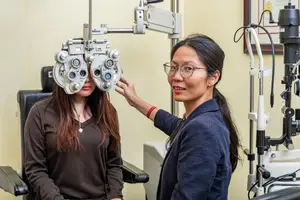
Your eyes need to aim, focus, and move together while you read, use a screen, drive, or look around a busy environment. When that coordination takes extra effort, everyday visual tasks can become tiring or uncomfortable.
Clear eyesight is only one part of vision. A standard eye chart measures how clearly you see, while a binocular vision assessment looks more closely at eye teaming, focusing, tracking, and coordination.
Common Symptoms
Binocular vision difficulties can affect people in different ways. Symptoms may become more noticeable during reading, computer work, driving, or other activities that require sustained visual attention.
Common symptoms may include:
- Headaches during or after reading
- Eye strain or tired eyes
- Dizziness or feeling off-balance
- Double vision Blurred or fluctuating vision
- Difficulty reading for long periods
- Losing your place or skipping lines while reading
- Trouble focusing on close work
- Motion sickness, including car sickness
- Light sensitivity
- Discomfort in busy or visually complex environments
- A feeling that your eyes are pulling or struggling to work together
- Visual fatigue after screen use
- Reduced comfort or confidence while driving
These symptoms can have several possible causes. A detailed assessment can help determine whether binocular vision is contributing to what you are experiencing.
Who Is Affected
Binocular vision difficulties can affect both children and adults. Some people notice problems during reading or schoolwork, while others experience symptoms during computer use, driving, sports, or visually demanding work.
Children may have trouble describing eye strain. Parents might instead notice reading avoidance, losing their place, covering one eye, fatigue during homework, or headaches after close work. Vision therapy may address visual skills related to focusing, eye teaming, tracking, and reading when an assessment identifies difficulty in these areas.
Adults may notice headaches, dizziness, double vision, or discomfort in environments with a lot of movement or visual activity. Visual coordination problems can also occur after concussion, whiplash, or brain injury. If your symptoms began after a concussion, whiplash, or brain injury, neuro-optometric rehabilitation may also be relevant to your care.
Because these symptoms can overlap with other eye and health concerns, your assessment focuses on identifying which visual functions may be contributing to your difficulties.
How We Treat This
Treatment starts with understanding how your eyes work together. Your assessment looks beyond eyesight alone to examine the visual skills you use for reading, focusing, tracking, movement, and daily activities.
Recommendations depend on the findings from your examination. Your optometrist will explain what the testing shows and which treatment options, if any, are appropriate for your visual needs.

Binocular Vision Assessment
A binocular vision exam evaluates how your eyes work individually and together. Depending on your symptoms, testing may examine eye alignment, eye teaming, focusing, tracking, and how your eyes coordinate during visual tasks.
The assessment helps identify areas where your visual system may be having difficulty and how those findings could relate to your everyday symptoms.
Prismatic Lenses
Prismatic lenses, also called prism glasses, may be considered when eye alignment or coordination contributes to visual discomfort. Prism changes how light enters the eyes, which can alter the demand placed on the eye-teaming system.
Prism is appropriate only when examination findings support its use. Your optometrist can explain whether you should consider it as part of your care.
Vision Therapy
Vision therapy is a structured program that works on visual skills such as eye coordination, focusing, and tracking. If we recommend vision therapy, we base your program on the specific visual skills identified during your assessment.
Care may include guided therapy and activities that reinforce visual skills between visits. Recommendations vary because binocular vision difficulties do not affect everyone in the same way.
You can also review Warden Optometry and Neuro Vision's broader eye care services to see how binocular vision care fits within the practice's other vision services.
Frequently Asked Questions
Yes. Clear eyesight and efficient binocular vision are different parts of visual function. You may read an eye chart clearly while still having difficulty with eye teaming, focusing, tracking, or sustained near work.
A binocular vision assessment examines these skills in more detail.
Your eyes and brain work together to interpret where you are looking and what is moving around you. If your visual system has difficulty maintaining comfortable coordination, some tasks may require more effort.
For some people, that added visual demand can contribute to headaches, eye strain, dizziness, double vision, or visual fatigue. An assessment can help determine whether vision is contributing to your symptoms.
Yes. Reading requires your eyes to move accurately across text, stay aligned, and keep close targets in focus.
Problems with these skills can contribute to losing your place, rereading lines, blurred or double vision, headaches, or tired eyes during sustained reading.
Visual coordination helps you interpret movement, distance, and the space around you. Some people with binocular or neuro-visual difficulties experience dizziness, motion sensitivity, balance problems, or discomfort in visually busy environments.
Testing can help determine whether visual coordination is contributing to these symptoms.
Treatment depends on your examination findings and the visual skills involved. Recommendations may include prismatic lenses, vision therapy, or other care appropriate to your individual assessment.
Your optometrist will review the results with you and explain which options, if any, fit your visual needs.
Could Your Eyes Be Contributing to Your Symptoms?
If headaches, dizziness, double vision, eye strain, or reading problems are making everyday tasks uncomfortable, a binocular vision assessment can help determine whether eye coordination is contributing to your symptoms.
Warden Optometry and Neuro Vision in Markham, ON offers binocular vision assessments and neuro-optometric evaluations for symptoms related to eye coordination and visual function. Call (905) 940-2015 or request a free phone consultation to discuss your concerns.