Struggling With Reading or Near Work?
If your child skips lines, loses their place, avoids reading, or complains of headaches after homework, a vision problem may be contributing. Sometimes, the eyes have to work harder than they should to focus, track, or stay coordinated during close-up tasks.
At Warden Optometry and Neuro Vision, we look beyond how clearly your child can see on an eye chart. We assess how the eyes move, focus, and work together during reading, schoolwork, and screen use.
When these visual skills do not work efficiently, near work can feel tiring, frustrating, or difficult to sustain.

Signs a Vision Problem May Be Contributing
Children do not always know how to explain a vision problem. Instead, you may notice changes in how they read, work, or respond to close-up tasks.
Common signs include:
- Skipping lines or losing their place while reading
- Avoiding books, homework, or other near work
- Headaches or eye strain after reading
- Words becoming blurry or appearing to move
- Complaints of double vision
- Covering or closing one eye
- Tilting the head while reading
- Difficulty staying focused on close tasks
- Limited reading stamina
- Trouble shifting focus between the board and a book
- Difficulty tracking across a line of text
A child can have clear distance vision and still struggle with these skills. A routine vision screening may not assess every aspect of vision involved in reading and near work.
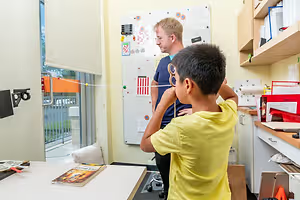
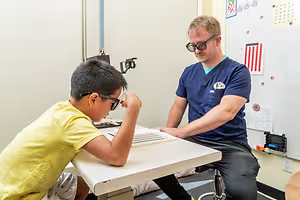
During a functional vision assessment, we look at how the eyes track, change focus, and coordinate as a team. Testing may include eye movement skills, focusing flexibility, binocular vision, and visual-motor integration.
Several visual skills need to work together during reading, homework, and other close-up tasks. Problems with focusing, eye teaming, or visual development may contribute to the symptoms your child experiences.
Focusing Problems (Accommodation)
Accommodation, or focusing, allows the eyes to keep objects clear at different distances.
A child may need to shift their focus from the classroom board to a worksheet and back again many times throughout the day. If the focusing system does not adjust efficiently, close work can become blurry, slow, or tiring.
You may notice headaches after homework, difficulty sustaining focus, or frequent complaints that words go in and out of focus.
Eye Teaming Problems (Binocular Vision)
Binocular vision, or eye teaming, describes how both eyes work together as a coordinated pair.
When eye teaming is difficult, the eyes may struggle to stay aligned on the same word or point. A child may experience double vision, words that seem to move, reduced depth perception, difficulty keeping their place while reading, or a tendency to cover one eye.
One specific binocular vision problem is convergence insufficiency, which affects the eyes’ ability to turn inward and work together comfortably during close-up tasks.
Strabismus, sometimes called an eye turn or crossed eye, also affects eye alignment. Depending on the type and severity, it can interfere with how the brain combines information from both eyes.
Lazy Eye (Amblyopia)
Amblyopia, often called lazy eye, develops when one eye does not develop normal visual ability and the brain begins relying more heavily on the stronger eye.
It can affect visual clarity, eye coordination, and depth perception. In some cases, strabismus or other problems that interfere with balanced visual development contribute to amblyopia.
Early assessment is important. Treatment options depend on the individual patient, including their age, visual function, and diagnosis. Older children and adults may still have options for care depending on their findings.
How Vision Therapy Helps Kids Focus and Read Comfortably
Vision therapy is a structured, individualized program designed to improve how the eyes and brain work together.
It is more than a set of eye exercises. Therapy targets specific visual skills that may be contributing to difficulty with reading, schoolwork, or sustained close-up tasks.
Depending on your child’s needs, a program may work on:
Eye tracking across lines of text Eye teaming and coordination Focusing flexibility and control Visual efficiency during reading and homework Depth perception Visual-motor skills Strategies to reduce strain during near work
Some children may also need glasses as part of their care. Glasses improve visual clarity when you need a prescription, while vision therapy addresses how your visual system functions. Depending on the assessment findings, a child may need glasses, vision therapy, both, or neither.
Vision problems do not cause learning disabilities. However, difficulties with tracking, focusing, or eye teaming can make some reading and school tasks more tiring or uncomfortable.
Our goal is to identify what is working well, what may need support, and which options make sense for your child.
How Vision Therapy Helps Adults & Athletes
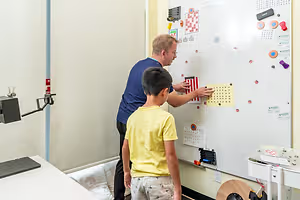
Adults who experience headaches, migraines, or dizziness may benefit from vision therapy when a visual problem is contributing to their symptoms. Therapy may also address visual skills involved in screen use, driving, balance, and spatial awareness.
We help patients with double vision, digital eye strain, and post-concussion visual difficulties. Some adults experience headaches or difficulty concentrating on screens. Others find that their vision has not felt the same since an accident or illness.
Warden Optometry and Neuro Vision offers vision therapy for athletes across Markham. Eye Care Services include comprehensive eye exams, custom contact lenses, concussion and whiplash management, and neuro-visual training to support coordination, comfort, and visual performance during sports.
Advanced Tools & Fellowship-Level Training
Dr. Yan Ling Liang has completed more than 800 hours of advanced coursework in vision therapy and is a Fellow of the Neuro-Optometric Rehabilitation Association.
Her clinical work includes neurodevelopmental and neurotrauma cases. Dr. Liang has published and presented research on traumatic brain injury and eye focusing, as well as COVID-19 and focusing dysfunction treatment.
Our clinic also uses tools such as syntonic light therapy and customized home programs to support treatment between visits.
We base therapy plans on each patient’s symptoms, assessment findings, and visual needs. We explain each step clearly so children, parents, and adult patients understand what they are working on and why.
Frequently Asked Questions
Yes. A child may see clearly on a standard eye chart but still have problems with focusing, tracking, or eye teaming.
These skills affect how comfortably and efficiently the eyes work during reading and other near tasks. A functional vision assessment can evaluate areas that a basic distance screening may not test.
Vision problems do not cause learning disabilities, but they can make certain school tasks harder.
If a child struggles to track words, maintain focus, or keep their place while reading, they may become tired or frustrated more quickly. An assessment can help determine whether a vision problem is one factor contributing to those difficulties.
Not always. Many school screenings focus primarily on distance vision. They may not evaluate focusing, eye tracking, binocular vision, or other visual skills involved in sustained reading and near work.
It depends on what the assessment finds. Glasses correct blurry vision or help you focus when you need a prescription. Vision therapy addresses visual skills such as focusing control, eye teaming, and tracking.
Depending on the findings, a child may benefit from glasses, vision therapy, both, or neither.
Some visual skills change as a child develops, but an eye doctor should assess persistent symptoms instead of assuming they will disappear.
If your child continues to experience double vision, headaches, eye strain, or difficulty with reading and close work, an evaluation can help determine whether a visual problem is contributing.
Early identification is important because vision develops rapidly during childhood.
Treatment decisions depend on the individual patient, including their age, visual function, and the cause of the amblyopia. Older children and adults may still have treatment options, so an assessment can help determine what may be appropriate.
The length of a vision therapy program depends on the condition we are treating, the visual skills, and how the patient responds.
Programs may take place over several weeks or months. We explain the recommended plan and monitor progress throughout therapy.
Get Clear Answers About Your Child’s Vision
If reading, homework, or other close-up tasks regularly leave your child tired, frustrated, or uncomfortable, a functional vision assessment can help determine whether focusing, tracking, or eye teaming difficulties may be contributing.
Request a consultation with Warden Optometry and Neuro Vision to better understand what is happening and what the next step may be.