Dizziness, Headaches or Light Sensitivity After a Head Injury?
After a concussion, whiplash, brain injury, stroke, or long COVID, symptoms such as dizziness, headaches, and light sensitivity can involve more than eyesight alone. They may reflect changes in how your eyes, brain, and balance systems work together.
At Warden Optometry and Neuro Vision, we evaluate these functional vision problems and provide neuro-optometric rehabilitation when appropriate. Care focuses on how your visual system handles everyday demands such as reading, screen use, movement, work, and driving.


How Injury and Neurological Conditions Can Affect Vision
Your visual system supports more than clear eyesight. It helps your eyes and brain work together during focusing, movement, and balance.
A concussion, whiplash injury, stroke, or neurological condition can disrupt these functions, even when each eye still sees clearly on a standard vision test.
Changes can affect:
- Eye coordination and alignment
- Eye tracking
- Focusing ability and endurance
- Visual processing
- Depth perception
- Motion sensitivity
- Balance and spatial awareness
- Integration between the visual and vestibular systems
You can have 20/20 vision and still have problems with eye coordination, focusing, visual processing, or balance.
Symptoms do not always appear immediately. You may notice them days or weeks later, particularly when you return to reading, screens, driving, work, or environments with a lot of movement and visual activity.
Post-Concussion Vision Syndrome
Post-concussion vision syndrome describes ongoing visual symptoms after a concussion.
For some people, the issue is not visual clarity but how efficiently the visual system performs. Reading, focusing, movement, or visually complex environments may require more effort than they did before the injury.


Common Vision Symptoms After Concussion or Whiplash
Post-injury vision problems can look different from person to person. Some symptoms are obvious, while others appear only when the visual system is under greater demand.
Common concerns include:
- Persistent dizziness, vertigo, or imbalance
- Headaches, especially after reading or screen use
- Light sensitivity
- Motion sensitivity
- Blurred, unstable, or double vision
- Difficulty focusing or reading
- Slower reading or frequent re-reading
- Trouble concentrating
- Mental or visual fatigue
- Difficulty with depth perception
- Difficulty in busy or visually complex environments
- Feeling disoriented or “off” in your surroundings
- Reduced visual stamina when returning to work or school
You may feel reasonably well at rest but notice symptoms when reading, walking through a crowded space, working at a computer, or keeping up with a visually demanding day.
Persistent symptoms may warrant a closer look at how your visual system is functioning, not only how clearly each eye can see.
How We Help You Feel Steady and Comfortable Again
Neuro-optometric care looks beyond your prescription to assess eye coordination, focusing, visual processing, and responses to movement.
Your evaluation identifies the visual skills that may be contributing to your symptoms. Your eye doctor can then structure care around your examination findings and visual demands.
What Is Neuro-Optometric Rehabilitation?
Neuro-optometric rehabilitation focuses on retraining visual skills affected by brain injury, neurological conditions, or illness.
Rehabilitation targets specific areas of visual function that may have become less stable or efficient. Depending on your assessment, a program may address:
- Eye tracking and coordination
- Focusing endurance
- Visual processing
- Depth perception
- Sensitivity to movement
- Light sensitivity
- Visual-vestibular integration, or how vision and balance signals work together
Treatment may include guided in-office therapy, home-based activities, and, in some cases, syntonic light therapy.
You may also hear this care described as neuro-optometry or Neuro-Vision Rehab, particularly in referral or rehabilitation settings.
Vision Therapy for Post-Injury Visual Function
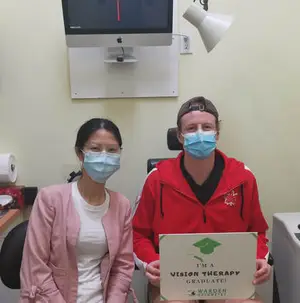
Vision therapy is a structured program that trains visual skills and how the brain processes visual information. It is not simply a set of exercises to strengthen the eye muscles.
For post-injury care, a program may include activities designed to:
- Rebuild eye coordination and tracking
- Improve focusing endurance
- Increase tolerance for visually demanding tasks
- Support a gradual return to reading and screens
- Address visual overload from movement or complex environments
Your program is adjusted as your visual function and symptoms change. Your eye doctor may combine in-office sessions with home-based activities.
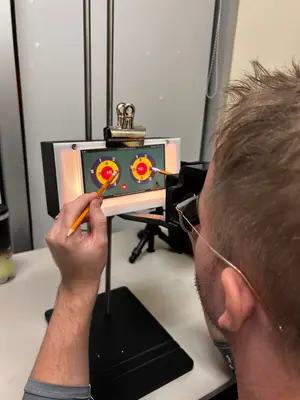
What to Expect During Your Evaluation
Your visit begins with a detailed discussion of your symptoms, health history, daily activities, and visual demands.
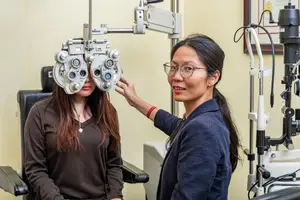
Testing goes beyond a standard prescription check. Depending on your symptoms, the evaluation may examine how your eyes:
- Work together
- Track moving or stationary targets
- Maintain focus
- Respond to movement
- Process visual information
- Contribute to balance and spatial awareness
Your results are then explained in clear language. If the team recommends treatment, they outline a plan based on your findings, goals, and response over time.
Dr. Yan Ling Liang has fellowship-level training in vision rehabilitation and has published research on post-COVID vision dysfunction. Care is available in English, Cantonese, and Mandarin.
Migraines, Dizziness & Balance
Dizziness, light sensitivity, and balance problems can also occur without a head injury. If your symptoms are linked to migraines or began without a clear injury, visit our Migraines, Dizziness & Balance page for information specific to that symptom pattern.

Vision Therapy and Related Visual Conditions
Focusing, eye-teaming, and visual processing problems can also occur without a concussion or brain injury. Vision therapy may also address binocular vision dysfunction (BVD), convergence insufficiency, eye-tracking difficulties, or double vision when identified during an examination.
Request a Neuro-Optometric Evaluation
If dizziness, headaches, light sensitivity, visual discomfort, or concentration difficulties continue to affect your daily life after a concussion, whiplash, brain injury, stroke, or post-COVID illness, a neuro-optometric evaluation can help identify whether visual function may be contributing to your symptoms.
At Warden Optometry and Neuro Vision, the evaluation assesses more than visual clarity. It looks at how your eyes and brain work together during the activities that are causing difficulty.
Frequently Asked Questions
Yes. Clear eyesight and comfortable visual function are not the same thing.
You can see clearly on a standard vision chart but still have difficulty with eye coordination, tracking, focusing, visual processing, movement, or balance after an injury.
Some visual problems become noticeable only when your visual system is under greater demand. Reading, computer work, driving, movement, and visually complex environments require sustained coordination and processing.
This can also help explain why routine eye testing may appear normal even when everyday visual tasks still feel difficult.
General concussion care addresses the broader effects of a head injury. Neuro-optometric care focuses specifically on visual function and whether it may be contributing to dizziness, headaches, light sensitivity, reading difficulty, or motion sensitivity.
Neuro-optometric care may be one part of a broader recovery plan.
Sessions use structured visual activities to work on skills such as tracking, focusing, eye coordination, and visual processing. We adjust activities based on the findings and your response to treatment. Some programs also include activities for you to complete at home.
Some activities may temporarily make your eyes feel tired as your program progresses.
There is no single timeline. The length of a rehabilitation program depends on your condition, symptoms, goals, examination findings, and response to care.
We can adjust your care plan over time instead of following the same schedule for every patient.
Returning to reading, computer use, work, and visually complex environments may be important rehabilitation goals. Driving may also be a goal when it is appropriate and safe based on your individual recovery.
Treatment may address the visual skills involved in these activities. Your individual goals and readiness depend on your examination findings and progress.
Persistent dizziness can have more than one contributor. If symptoms continue after vestibular therapy, a neuro-optometric assessment may help determine whether visual coordination, processing, or visual-vestibular integration is also involved.
Coverage varies by insurance plan and service. Warden Optometry's team can help you understand your benefits and provide documentation when needed. Your insurer determines final coverage.