
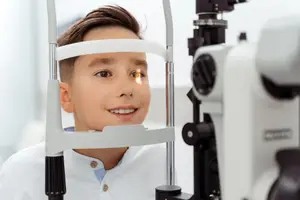
Parents often ask how an optometrist can check a child’s eyes before the child knows their letters. It’s a fair question, and one we hear often at our clinic in Warden Optometry, ON. The answer is simpler than you might expect. Children communicate how they see the world through play, movement, and natural reactions long before reading begins.
At Warden Optometry, we provide paediatric eye examinations that align with each stage of childhood development. We keep visits calm and reassuring for both children and parents. You can learn more about our children’s eye health services or explore our comprehensive eye exams for families.
Why Early Vision Testing Matters
Vision plays a key role in how children learn and interact with their surroundings. Babies begin by tracking faces and bold shapes. Toddlers explore depth and movement. Preschoolers rely on clear sight to recognize colours, shapes, and early symbols.
Each stage builds on the last, which is why early assessment matters for vision for child development.
Dr. Yan Ling Liang, our behavioural and neuro-optometrist, has extensive experience working with children of all ages. Her calm, child-friendly approach helps little ones feel safe while giving parents clear insight into their child’s development.
A child’s visual system develops differently from an adult’s. Newborns respond best to strong contrasts. By six months, babies may fixate on patterns. At three years old, children may struggle with letters but easily recognize familiar images.
A paediatric eye exam takes these milestones into account at every step. The Canadian Association of Optometrists recommends a child’s first eye exam at six months. They should have their next visit by visits at age three and again before starting school. After that, yearly exams help us track changes as children grow and their visual demands increase.
Early testing also gives us a chance to spot concerns before they affect classroom comfort, reading readiness, or coordination during play. Even small vision challenges can lead to greater frustration if left untreated.
How Kids Communicate Without Words
Many parents worry that their child needs to know letters before an exam. They don’t. A paediatric optometrist uses age-appropriate tools designed around how children naturally interact with the world.
Picture Matching for Toddlers
Young children often recognize simple pictures long before they recognize letters. When shown images like airplanes or hands, many three-year-olds respond by pointing, naming, or mimicking shapes. These responses help us understand visual clarity and recognition in a way that feels like play.
This activity supports early recognition skills that later contribute to reading and classroom learning.
Shape Fitting for Nonverbal Kids
Some children are shy, nonverbal, or still developing speech. For them, shape-matching activities work well. When a child confidently places a shape into the correct space, their hands show how their visual system guides movement and coordination.
This test helps us understand how vision supports fine motor development and early writing skills.
Stripe Tests for Infants
Infants communicate through attention and eye movement. High-contrast black-and-white stripes naturally draw a baby’s gaze. When an infant tracks these patterns, we gain insight into how the eyes and brain are learning to work together. These early observations support healthy vision for child development as a child grows.
This helps us assess whether early visual pathways are developing at the pace we expect in the first year of life.
What a Complete Paediatric Eye Exam Looks Like
Every paediatric eye exam moves at the child’s pace. Some children are curious and eager to explore. Others need a gentle introduction and time to warm up. The goal is always the same: to help parents understand how their child sees the world.
A child’s first visit usually feels relaxed and playful. Most families are surprised by how quickly children warm up once they explore the tools we use.
During your child’s exam, we look at several key areas of visual function to understand how their eyes support learning and daily activities.
At Warden Optometry, a paediatric eye exam may include:
- Visual clarity testing to see how each eye focuses
- Eye teaming and tracking checks to assess how the eyes work together
- Depth and 3D vision testing to evaluate how the brain interprets space
- Eye health screening to detect concerns that may not show obvious symptoms
These results guide recommendations for vision therapy, myopia management, learning support, or routine follow-up care. Parents often tell us that understanding their child’s vision makes it easier to explain challenges at school or at home.
A typical paediatric eye exam lasts about 30 to 45 minutes, depending on your child’s age and comfort level. You don’t need to prepare anything in advance, though bringing a favourite toy or comfort item often helps younger children feel at ease.
Many insurance and benefits plans in Ontario offer coverage for children’s eye exams, which gives families peace of mind when keeping up with yearly visits.
Parents sometimes notice small signs that suggest a child may benefit from an exam, such as sitting very close to screens, rubbing their eyes often, or losing their place while looking at books. These behaviours can be subtle, but they offer valuable insight into how a child uses their eyes throughout the day.
How Vision Shapes Childhood Learning
Clear vision supports confidence. When children can follow a ball, focus on a book, or track a moving toy without strain, learning feels easier. These everyday moments offer important clues about visual development. Strong visual skills help children:
- Recognize shapes and patterns
- Follow lines of text
- Judge distance and movement
- Coordinate hand-eye tasks like drawing or stacking blocks
Addressing vision concerns early can support reading stamina, attention, and coordination. A paediatric eye exam supports more than eyesight. It supports the foundation children rely on throughout school and beyond.
Why Early Care Creates Long-Term Confidence
Visual pathways develop quickly in early childhood. By around age six, many of these systems are already established. Early eye exams help identify concerns such as eye turns, focusing difficulties, or delayed visual development before they affect learning or behaviour.
Dr. Liang’s background in behavioural and neuro-optometry allows her to guide families who want a deeper understanding of how vision relates to reading, balance, and attention. Her approach combines clinical precision with a welcoming, child-focused environment.
Paediatric Eye Care in Warden Optometry
Families often look for more than a routine vision check. They want a paediatric optometrist who understands childhood development and creates a comfortable experience from the moment their child arrives.
At Warden Optometry, we tailor every visit to a child’s stage of growth. Whether your baby is learning to track patterns, your toddler enjoys picture matching, or your school-age child needs support with reading or focus, our eye care team is here to help.
We are proud to support families across the Warden Optometry community and enjoy building long-term relationships as children grow and their vision needs evolve.
Ready to Support Your Child’s Vision?
Strong vision supports how children learn, explore, and connect with the world around them. If it’s time to book a paediatric eye exam, our team is ready to welcome your family at our Warden Optometry, ON location.
Schedule an eye care appointment with Warden Optometry today and take the next step in supporting your child’s visual development.